Decades to build trust. Millions to build the brand. Don’t let your digital experience erase it.
Defining Distinctive Digital Brand Identities for Financial Institutions
Cases: strategic outcomes
Chosen by leading FIs in 39 countries








Internationally awarded


































Financial UX design authority enabling large-scale financial institutions to differentiate and lead in the digital world
150+
financial service systems designed across retail, corporate, and fintech
80+
financial institutions transformed through distinctive digital CX
39
countries served with long-term client partnerships
10+
years of strategic UX governance focused exclusively on financial services
30+
international design and banking awards
81
Net Promoter Score with 87% of clients recommending UXDA at the highest rate
30
financial product categories mastered through strategic UX governance
1M+
FIs managers across 127 countries following UXDA’s reports and insights
"The most expensive digital decisions are made before the first screen is designed"
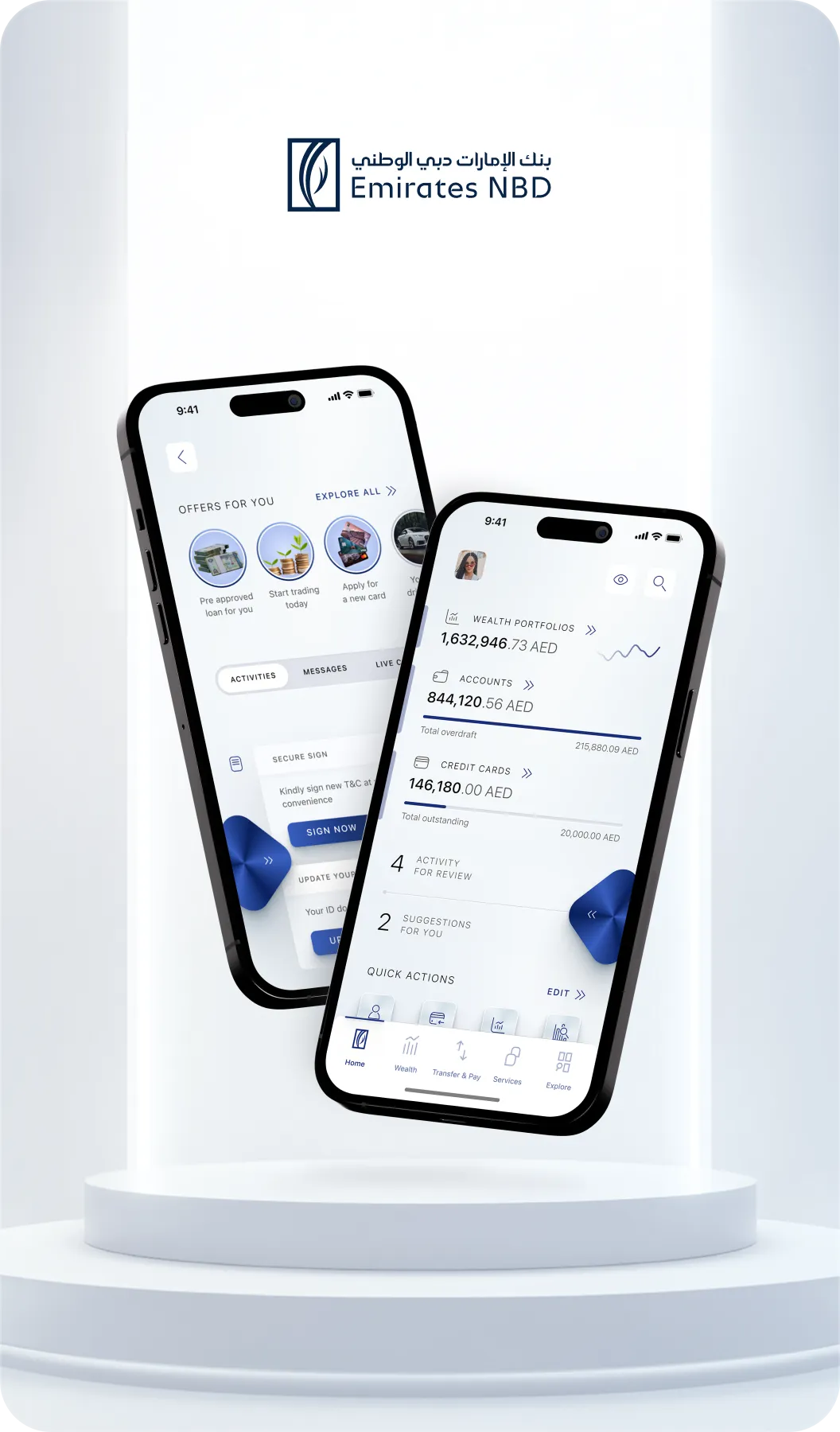
Emirates NBD: Driving ROI Through Strategic UX
The digital ecosystem was strategically restructured to enable scalable personalization, drive long-term adoption, and support sustainable growth in one of the world’s most digitally mature banking markets.
Strategic UX engagement: from 500 000 €
Retail Banking UX · Mobile & Web · UAE

Garanti BBVA Securities: Rebuilding a Reliable Trading & Investing Platform
The eTrader mobile platform was redesigned to make investing more accessible for new investors while preserving the control, depth, and functionality experienced traders expect.
Strategic UX engagement: from 500 000 €
Investment UX · Trading Platform · Türkiye

NMB: Scaling a Super App With Global Expertise and Local Trust
Creating a scalable foundation for the Mkononi Super App by combining world-class digital banking standards with a distinctly Tanzanian experience designed to build trust, confidence, and adoption.
Strategic UX engagement: from 500 000 €
Retail Banking · Banking Super App · Tanzania

Liv X: Defining a Distinct Digital Banking Identity
As part of the Emirates NBD ecosystem, Liv X turns a bold lifestyle identity into a differentiated banking experience designed to attract and engage a new generation of customers.
Strategic UX engagement: from 450 000 €
Digital Banking · Lifestyle Banking App · UAE

Liv X: Exploring the Future of Spatial Banking with Liv Bank
This innovative concept reimagines digital banking within a spatial environment, demonstrating how core banking use cases could operate beyond traditional screens.
Strategic UX engagement: from 500 000 €
Spatial Banking · Immersive Banking Experience · UAE

GCash: Scaling Investment Experience for a 90M Market Audience
Designed for scale, the investment experience supports more than 90 million users by simplifying access, education, and progression within the GInvest journey.
Strategic UX engagement: from 350 000 €
Super App · Investment UX · Philippines

Private Wealth Systems: Redefining Wealth Management for UHNWI
Designing an innovative platform that reduces friction in managing complex wealth portfolios by introducing clarity, transparency, and control into high-stakes financial workflows.
Strategic UX engagement: from 450 000 €
Wealth Management · UHNWI Platform · US
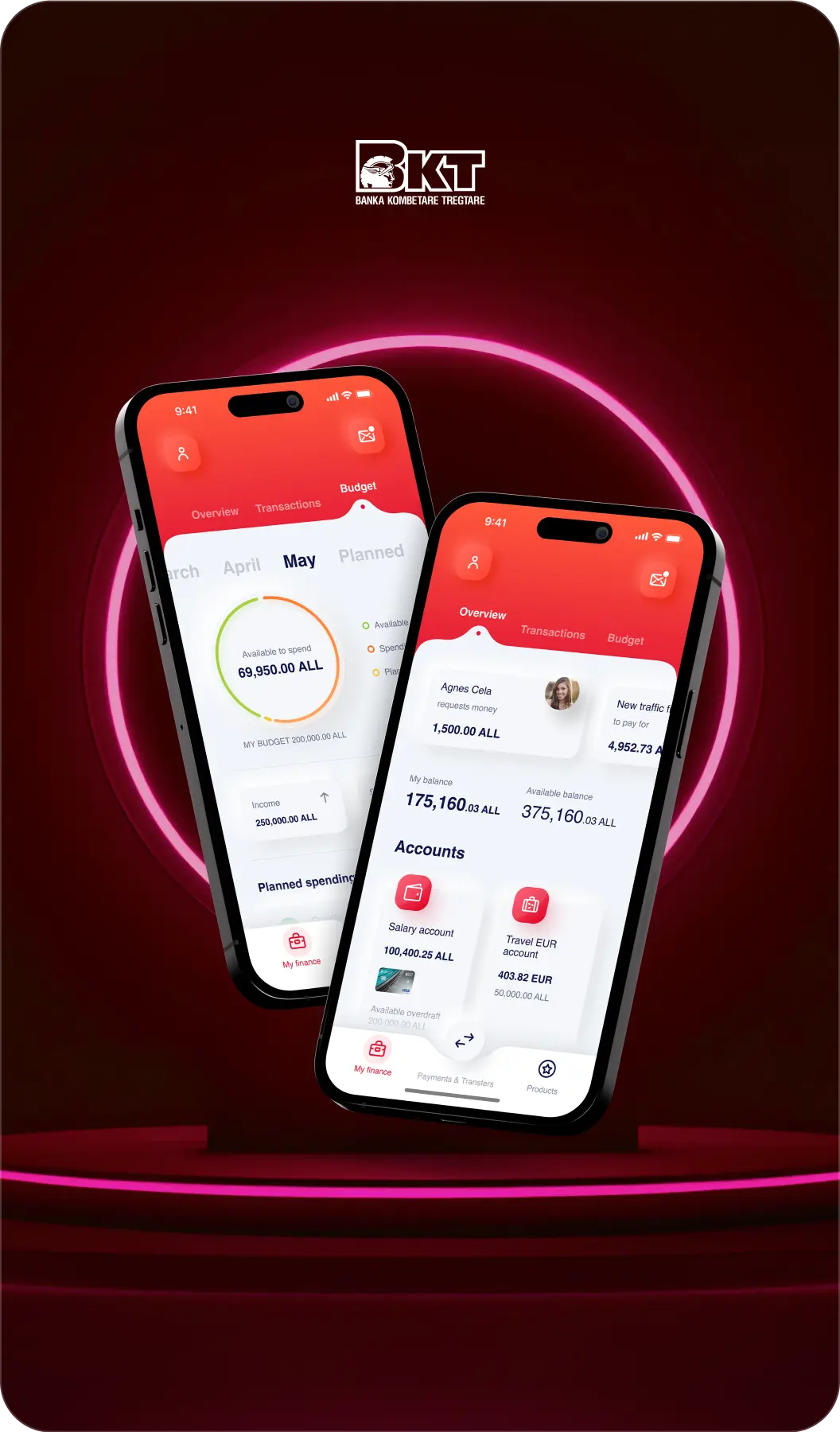
BKT: Resetting Digital Banking Perception in Albania
The BKT mobile platform was redesigned to remove dependency on physical support by enabling users to complete everyday banking tasks independently and remotely.
Strategic UX engagement: from 450 000 €
Retail Banking · Mobile Banking App · Albania
Defining the Financial UX Future




In digital banking, great UX is no longer enough. Financial brands need distinctive digital identities that build recognition, trust and competitive advantage. Explore 10 UXDA-designed financial interfaces showing how strategic UX turns complex financial services into coherent, intuitive and unmistakably branded digital experiences.

Bank-as-a-Product: Why a Mobile Banking App Redesign Is Not Enough
A best-in-class mobile app won’t fix a fragmented banking experience. This article explores why the biggest UX challenges often sit beyond the app—in disconnected channels, communications, operations, brand experiences and governance—and why sustainable digital transformation requires banks to shift from isolated product UX to one coherent experience ecosystem.

AI Implementation in Banking: How UX Research Can Prevent Scaling Bad UX
AI can accelerate digital banking transformation—but it can also scale the wrong assumptions. This article explores how structural blind spots and misdiagnosed customer problems lead banks to optimize broken experiences, automate friction, and compound strategic risk—and why an independent UX perspective is essential before AI turns flawed thinking into infrastructure.

How to Improve Digital Banking Customer Experience by Reducing Experience Debt
Fast digital delivery can quietly become one of the biggest strategic liabilities in banking. This article explores how the build trap creates compounding experience debt, leading to fragmented customer experiences, higher costs, lost revenue, and weaker trust—and why Systemic UX Governance is essential for building sustainable competitive advantage.











30 financial domains. One UX discipline. Strategic UX governance.
- Retail banking
- Corporate banking
- SME banking
- Core banking
- Islamic banking
- Kids and family banking
- AI & conversational banking
- Spatial & immersive banking
- Digital Wallets
- ATM's solutions
- Credit Unions
- Trade finance
- Financial advisory
- Remittance services
- Transaction Banking
- Financial Super Apps
- Private & wealth management
- Payment processing
- Savings & Deposits
- Investing & brokerage
- Trading & Financial Markets
- Insurance & insurtech
- Lending & Credit
- Tax automation
- Personal Finance Management
- Crypto assets
- Credit scoring
- Sustainable finance
- White-label solutions
- Treasury Management
Does your financial service feel just like all the others? Stop copying. Start defining.
Distinctive Digital Brand Identities aren't created by copying competitors. They're defined through deliberate choices about what an institution should stand for, how it should behave, and where it should lead. UXDA defines what your digital experience should become—before millions are invested in building it.
Exclusive Engagement. Institutional Accountability
Selective by design. We work with a limited number of financial institutions each year, allowing our team to stay deeply involved in the decisions that shape their digital experience. Over more than a decade, UXDA has defined and governed the Digital Brand Identities of leading financial institutions across 39 countries, strengthening trust between brands and their customers. We choose engagements where the digital experience matters at institutional scale.


Digital Brand Identity Defined, Not Replicated
Standardized solutions create parity, not advantage. When digital products rely on shared patterns and copied features, institutions lose Digital Brand Identity and become interchangeable. UXDA addresses this gap by defining experience positioning at a strategic level—translating brand values into clear experience principles and enforceable behavioral rules. Research, prototyping, and experience systems are developed in-house to ensure coherence, differentiation, and long-term defensibility across the digital ecosystem.
Protecting Digital Value of Brands
Millions are invested across products, technology and transformation. Yet the experience is often shaped by thousands of disconnected decisions across product, technology, brand, compliance and business teams. In 30 financial categories—including enterprise platforms exceeding 6,000 screens—UXDA creates the strategic clarity and governance of Digital Brand Identity coherence as a long-term business asset. We solve the decision problem behind the design problem.


Setting the Next Standart in Financial Experience
We don't follow digital banking trends. We explore what financial experiences should become next. With 30 international awards and more than 300 industry publications, UXDA contributes to the evolution of financial services through the design of banking superapps, cloud-native core platforms, AI-driven banking systems, and emerging spatial interfaces. The focus is not novelty, but establishing cross-platform experience systems that remain credible, consistent, and defensible over time.
Proprietary DXG System of UX Governance
Digital experience is no longer a collection of screens. It is an institutional asset. UXDA operates through DXG—Digital Experience Governance System. Through thousands of decisions we create one coherent experience using one system of: 9 impact points; 44 proprietary UX/UI methods; 11 years of financial experience. DXG System enables complex financial institutions to replace fragmented product efforts with a predictable, governable path to long-term trust, differentiation, and control that protects multi-million digital investments.