
Financial Service Design: Orchestrating Complex Digital Ecosystems Around Customer and Business Value
Financial service design is the strategic orchestration of products, channels, processes, technology, people and interactions into one coherent financial experience. In large banks and financial institutions, it connects the entire service ecosystem so customers can move seamlessly across touchpoints while the organization delivers value consistently at scale.
What Is Financial Service Design?
Financial service design connects customer journeys, products, channels, business processes, technology, data and employee actions into one coordinated system designed around meaningful customer and business outcomes rather than isolated touchpoints.
How Is Financial Service Design Different From UX Design?
UX design often focuses on the quality of specific digital interactions and journeys, while financial service design examines the broader system behind the experience, including front-stage interactions, back-stage processes, policies, technology and organizational dependencies.
Why Do Banks Need Strategic Service Design?
Large financial institutions operate across many products, channels and teams, making strategic service design essential for reducing fragmentation, repeated steps, inconsistent logic, disconnected information and conflicting service behavior across the customer relationship.
How Does Financial Service Design Improve Customer Journeys?
Service design reveals how different journeys and services depend on one another, helping banks redesign handoffs, information flows, processes and interactions so customers can move more seamlessly across payments, cards, lending, savings, investments, support and other financial needs.
How Does Service Design Improve Operational Efficiency?
By connecting front-stage customer experience with back-office processes, employee workflows, technology, data and policies, financial service design can reduce duplication, operational complexity and avoidable friction while improving service quality and efficiency.
What Is the Role of Service Architecture in Banking?
Service architecture defines how products, capabilities, channels, processes and supporting systems work together across the institution, creating a structural foundation for more coherent customer experiences and scalable digital transformation.
How Does Financial Service Design Support Omnichannel Banking?
Financial service design helps align mobile, web, branches, support, AI and other channels around shared customer goals, enabling information, service behavior and context to remain coherent as customers move between different touchpoints.
How Does Financial Service Design Support Digital Transformation?
As banks expand into AI, embedded services, ecosystems and new channels, service design creates a connected experience architecture that helps new capabilities reinforce the same strategic intent, Digital Brand Identity and customer relationship instead of increasing fragmentation.
Why Is Financial Service Design a Strategic Discipline?
At enterprise scale, financial service design becomes a coordination discipline that aligns customer experience, business operations, technology and organizational decision-making, helping institutions improve adoption, efficiency, service quality and long-term experience coherence.
Explore UXDA insights on financial service design, banking service design, financial UX, customer journey design, service architecture, digital banking ecosystems, omnichannel experience, Digital Brand Identity, UX governance and experience transformation.


Digital Banking UX Strategy: How to Turn UX Into Strategic Infrastructure
Financial institutions can no longer treat digital UX as a tactical layer of screens, flows and features. This article explores 12 steps to turn digital banking experiences into strategic infrastructure — helping banks design systems of trust, guide better customer decisions, reduce risk and create long-term business resilience across the full financial lifecycle.

Digital Banking Competitive Advantage: Why Customer Experience Beats Feature Parity
Financial brands have long competed on speed, safety, and features—but real loyalty comes from emotion, not functionality. As expectations shift from efficiency to feeling, the winners will be those who design relationships, not just interfaces. This article shares 10 principles to turn financial apps into emotionally engaging growth engines.


Toxic Behaviors to Avoid: Building a Sustainable Culture of Innovation in Banking Product Teams
In digital finance, many banks face a hidden barrier: dysfunctional team dynamics. Common fixes miss the root cause—toxic behaviors that block innovation and user-centered design. Discover what these toxic behaviors are and how to fix them in UXDA’s latest article.

Applying Neuromarketing to Digital Banking Apps and Fintech Design
Despite a decade of digital innovation, financial services often remain cold and overwhelming. At UXDA, we use neuroscience and neuromarketing to transform emotion into engagement. Discover how neuromarketing transforms digital banking by addressing emotional barriers, building trust, and creating empowering user experiences.
13 Best Lessons from Leading Tech Brands for Financial Service UX Design
Imagine the ease of one-click Amazon buys or Netflix’s perfect picks—these UX breakthroughs power billion-dollar brands. Discover 13 lessons from tech giants and how to apply them in finance.




Procurement Practices as a Hidden Risk to Banking Digital Experience
Effective procurement is crucial for digital banking success. While some teams focus solely on cost, others prioritize strategic expertise and quality, leading to stronger, more impactful products. Explore the key factors that make the difference.

The Limits of White-Label Banking in Achieving Experience Excellence
White-label platforms help banks launch digital products faster, but they can also limit long-term success. With the right approach, financial institutions can balance speed with a tailored user experience that strengthens their brand and fuels growth.
7 Digital Banking Trends of 2026 Redefining Customer Experience
In a world in which anyone can download a banking app, just being digital is no longer a differentiator. The real challenge now is building a brand's digital experience that goes beyond basic functionality—an experience that bridges the financial brand with customers’ values, emotions and long-term aspirations.
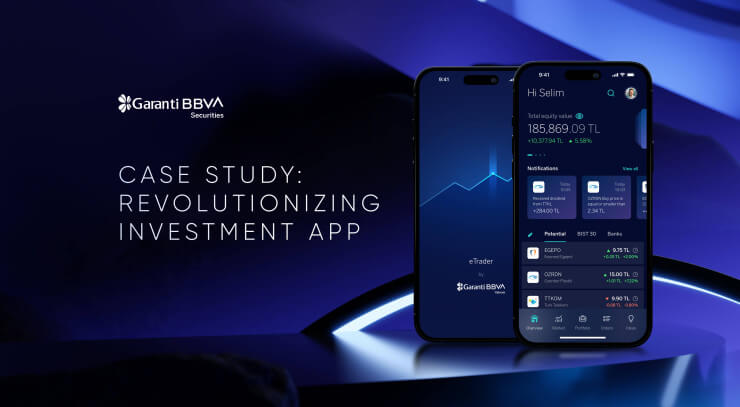
Garanti BBVA Securities Case Study: Designing a World-Class Investing Experience
Garanti BBVA Securities aimed to move beyond third-party solutions by setting a new standard for investment experience in the Turkish market. The challenge was to transform eTrader into a highly personalized, user-centered app that delivers outstanding digital experience.

ChatGPT Prompts in Digital Banking and Fintech Product Design
This article unveils the secrets of using ChatGPT prompts to drive innovation in banking UX, providing insights into how this tool can be integrated into the standard design process for transformative results.
Apple-Inspired Banking UX: How Design Discipline Creates Better Digital Experiences
Many banks believe that packing their apps with countless features and the latest technology will attract and retain users. However, this approach often results in the opposite effect, driving users away due to overwhelming complexity.
- 1
- 2


