
Digital Banking: Solutions, Trends, Innovation and Customer Experience
Digital banking is the delivery of financial products and services through digital channels such as mobile apps, web platforms and emerging AI-powered interfaces. It enables financial institutions to provide faster, more accessible, personalized and scalable banking experiences while transforming how customers manage money and interact with their bank.
What Is Digital Banking?
Digital banking allows customers to access and manage payments, accounts, savings, lending, investments and other financial services through digital channels without relying primarily on physical branches or manual processes.
What Are the Main Digital Banking Solutions?
Digital banking solutions include mobile banking, online banking, digital onboarding, payments, lending, investments, personalization, conversational banking, AI-powered assistance and self-service tools, helping customers complete financial tasks more easily across channels.
What Are the Most Important Digital Banking Trends?
Key digital banking trends include AI, agentic banking, intelligent automation, personalization, open banking, embedded finance, autonomous services and seamless omnichannel experiences, all of which are reshaping customer expectations and competitive dynamics.
How Does Digital Banking Improve Customer Experience?
Strong digital banking experiences reduce friction and make financial services more intuitive, accessible, relevant and convenient by simplifying complex journeys, providing contextual support and enabling customers to complete tasks whenever and wherever they need.
What Is the Role of UX in Digital Banking?
Digital banking UX determines how easily customers can understand, navigate and use financial products, making usability, information architecture, interaction design, accessibility, trust and personalization critical to adoption and satisfaction.
How Does Digital Banking Support Innovation and Transformation?
Digital banking provides the foundation for new products, business models, AI-powered services and continuous experience improvement, helping financial institutions modernize operations while responding faster to changing customer needs and market conditions.
What Is the Future of Digital Banking?
The future of digital banking will increasingly be shaped by AI agents, autonomous finance, hyper-personalization, intelligent automation and experience-led differentiation, making the ability to combine technology with trust, usability and customer value essential for long-term competitiveness.
Explore UXDA insights on digital banking, digital banking solutions, digital banking trends, digital banking innovation, digital banking UX, digital banking customer experience, digital transformation and the future of digital banking.




AI in Banking 2026: 21 Real-World Case Studies and Use Cases
Explore the latest real-world AI implementations in banking and discover how leading financial institutions are moving beyond experimentation to transform digital customer experience. From hyper-personalization and proactive financial guidance to intelligent self-service and agentic banking.

Digital Banking UX Strategy: How to Turn UX Into Strategic Infrastructure
Financial institutions can no longer treat digital UX as a tactical layer of screens, flows and features. This article explores 12 steps to turn digital banking experiences into strategic infrastructure — helping banks design systems of trust, guide better customer decisions, reduce risk and create long-term business resilience across the full financial lifecycle.
In-House UX Gaps in Banking: How External Expertise Accelerates Digital Innovation
Behind the polished surface of “digital transformation” lies a truth most banks avoid: relying on internal teams and legacy thinking often stalls real progress. This article reveals how pride, control, and risk aversion quietly sabotage innovation and leave banks trailing behind Fintechs.

Global Digital Banking: Strategic Implications for Banks and Financial Leaders
In this article, we explore how Fintech-driven banking globalization mirrors the media industry’s transformation, what obstacles and opportunities arise when financial services become borderless and how artificial intelligence (AI) is poised to change the game even further.

Digital Banking ROI: How Strategic UX Impacts Revenue, Cost-to-Serve and Retention
As the financial industry evolves, digital products will remain central to a bank's identity and perception, making digital product design and UX key elements of banking strategy, brand identity, and profitability.
Here's Why Open Banking is the Future of Fintech Experience
Total digitalization has brought changes to the financial industry and the open banking revolution will make UX design crucial in the future.
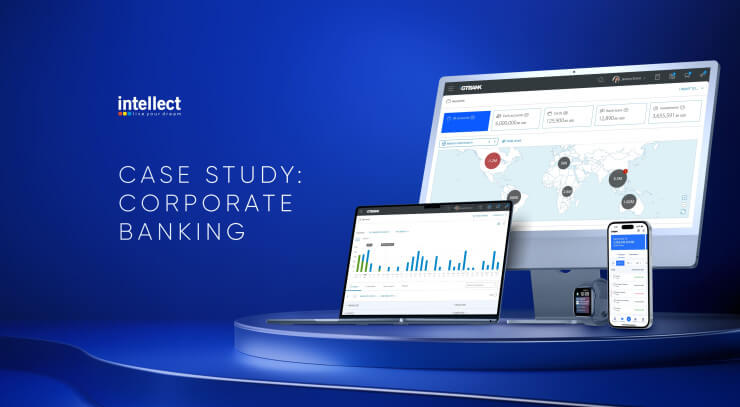
Transaction Banking UX Case Study: Transforming Treasury Management at Global Scale
In an exclusive case study we uncover the TOP insights of creating an exceptional UX for a corporate banking product by iGTB that consists of 5,000+ screens.


Bank of Jordan UX Case Study: Middle East Banking Redesign of Mobile UX
It took one year for the Bank of Jordan’s mobile banking app to go from a 2.8 to 4.7 star rating on Google Play. How? By teaming up with UXDA to create a comprehensive UX transformation.

Fintech Disruption In the Banking Industry is Driven by UX Design
Statistics on how and why Fintech use design to disrupt banking industry. What can we learn from it to gain success?
Million Dollar Question: Why Users Reject Easy Banking Solutions
Why do users sometimes still put up with complex banking services, even though they might have experienced an alternative that's much more easy and user-friendly?


Legacy Banking Systems: How Poor Back-Office UX Can Trigger $900 Million Mistake
Out of date back-office systems hold banks back from digitizing and providing the best user experience. We collected a number of real-life cases that demonstrate the dramatic impact inner culture has on customers.


