
User-Centered Design in Banking: Turning Customer Needs Into Better Financial Experiences
User-centered design in banking provides a strategic approach that places real customer needs, behaviors, goals and limitations at the center of product, service and experience decisions. It helps financial institutions move beyond internal assumptions and organizational silos by designing digital banking around how customers actually think, decide and manage their financial lives. The definition of User Centered Design (UCD) or Human Centered Design (HCD) is: a methodology of creating products or services that provide solutions based on the human or user perspective in a problem-solving process. The term, "user centered design" was first introduced by Donald A. Norman in his 1986 book, User Centered System Design: New Perspectives on Human-computer Interaction.
What Is User-Centered Design in Banking?
User-centered design in banking is a methodology for creating financial products and services from the customer perspective, using research, behavioral understanding, iterative design and validation to solve meaningful problems rather than simply digitizing existing banking processes.
What Is the Difference Between User-Centered Design and Human-Centered Design?
User-Centered Design (UCD) focuses specifically on the needs and behaviors of people using a product or service, while Human-Centered Design (HCD) is a broader concept that considers people and their wider social, emotional and environmental context, although the terms are often used interchangeably in financial UX.
What Is the User-Centered Design Process in Banking?
The UCD process typically includes understanding the user context, identifying requirements, designing solutions and testing results, ensuring that customer expectations influence both the creation and validation of financial products from the beginning.
Why Is Customer Research Important in User-Centered Design?
Research helps banks understand not only what customers do but why they behave that way, where they struggle, what creates uncertainty and which outcomes matter most, allowing teams to prioritize the right problems before defining solutions.
What Methods Are Used in User-Centered Design?
Common UCD methods include customer interviews, user personas, scenarios, use cases, journey mapping, behavioral research, usability testing and prototyping, helping teams understand customer context and continuously validate design decisions.
What Are the Main Principles of User-Centered Design?
Core UCD principles include deep understanding of users and context, customer participation, iterative design, user validation, holistic experience thinking and multidisciplinary collaboration, ensuring that solutions evolve through evidence rather than assumptions.
How Does User-Centered Design Improve Banking UX?
User-centered design helps banks create simpler journeys, clearer interactions, more relevant services and greater accessibility across onboarding, payments, lending, savings, investments and support, improving usability while reducing friction and uncertainty.
How Can Banks Scale User-Centered Design Across the Organization?
At enterprise scale, customer insight must influence business priorities, technology decisions, product architecture, service processes and UX governance, ensuring that customer-centered thinking becomes an organizational capability rather than remaining isolated within individual product teams.
What Business Value Does User-Centered Design Create?
Combined with Strategic UX, Financial UX and UX governance, user-centered design can improve digital adoption, customer satisfaction, usability, trust and competitive advantage by continuously translating customer understanding into better experience and business decisions.
Explore UXDA insights on user-centered design in banking, Human-Centered Design, customer-centered design, banking UX, financial UX, customer research, usability, customer journey design, Strategic UX and UX governance.


AI Implementation in Banking: How UX Research Can Prevent Scaling Bad UX
AI can accelerate digital banking transformation—but it can also scale the wrong assumptions. This article explores how structural blind spots and misdiagnosed customer problems lead banks to optimize broken experiences, automate friction, and compound strategic risk—and why an independent UX perspective is essential before AI turns flawed thinking into infrastructure.

Customer-Centric Banking Transformation: From Inside-Out to Outside-In
For decades, banks were built inside-out—core systems first, then products, and only later the customer. Digital-first challengers invert this logic, starting with brand purpose and experience and building the core to serve it. This article shows how traditional banks can turn their architecture upside down to compete in the outside-in era.
13 Best Lessons from Leading Tech Brands for Financial Service UX Design
Imagine the ease of one-click Amazon buys or Netflix’s perfect picks—these UX breakthroughs power billion-dollar brands. Discover 13 lessons from tech giants and how to apply them in finance.

Breaking Institutional Self-Deception to Improve Banking Customer Experience
Financial companies and banks worldwide are investing heavily to improve customer experience in banking. Despite these genuine efforts, many banks struggle to achieve the desired results. The culprit? Self-deception.

Apple-Inspired Banking UX: How Design Discipline Creates Better Digital Experiences
Many banks believe that packing their apps with countless features and the latest technology will attract and retain users. However, this approach often results in the opposite effect, driving users away due to overwhelming complexity.

Psychology Meets Finance: Ten Laws Shaping Fintech and Banking Apps Design
Let's explore the psychology of financial and banking product users by looking into their minds, behaviours and main aspects of why certain products are disliked while others are desired.

The $23B Cost of Sales-Driven Mindset in Retail Banking
We highlight the differences between thinking in a “new way” versus “the old one.” These differences can explain why some products are successful in the modern digital environment while others are not.


Double Red Dot Victory: World's Best Agency in Fintech Design
UXDA, the pioneering financial product design agency, has won two prestigious Red Dot Design Awards for its exceptional work in designing the banking super app my.t money for Mauritius Telecom, the largest telecommunications company in Mauritius.

Runrate UX Case Study: Financial Management Platform for Happiness
This is a UX Case Study of the Runrate app's UX design, that seamlessly combines planning, budgeting and investing with a philosophy of manifesting the future.
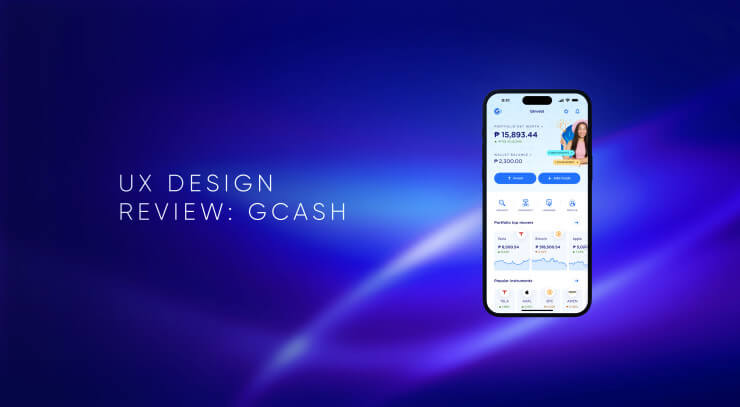
UX Design Review: What GCash Said About UXDA
This is a Clutch review recap of the GInvest investment experience UXDA designed for the Philippine largest e-wallet GCash.
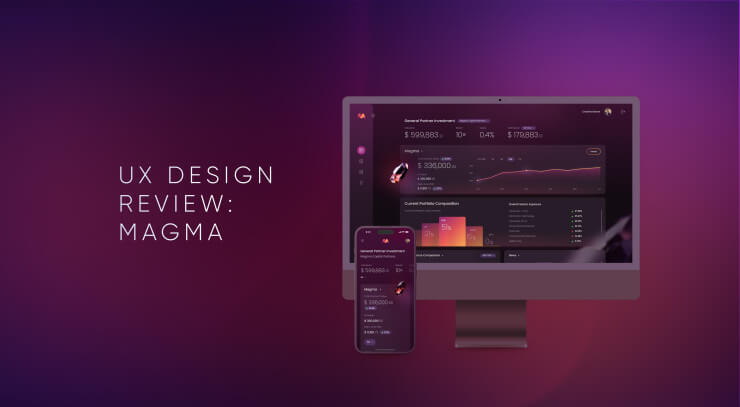
UX Design Review: What Magma Said About UXDA
This is a Clutch review recap of the user experience UXDA designed for an exceptional finance platform - the hedge fund Magma.
- 1
- …
- 3


