
Financial UX: Designing Coherent, Trustworthy and Competitive Financial Experiences
Financial UX is the strategic design of how people experience financial products, services and ecosystems across banking, fintech, wealth, payments, lending, insurance and other financial domains. It combines user experience, business strategy, technology, brand and behavioral understanding to make complex financial interactions clearer, more useful, trustworthy and commercially effective.
What Is Financial UX?
Financial UX is the design of financial products, services, journeys and ecosystems around customer needs, behaviors and business goals, helping people understand complex financial information, complete important tasks and make decisions with greater clarity and confidence.
How Is Financial UX Different From Interface Design?
Interface design focuses on individual screens and interactions, while financial UX addresses the entire customer experience across products, channels, systems and service processes, ensuring that each element contributes to one coherent financial relationship.
Why Is Financial UX Important in Complex Financial Services?
Financial services involve high cognitive load, sensitive decisions and interconnected journeys, making strong financial UX essential for balancing simplicity with complexity, innovation with trust, and standardization with differentiation across the customer experience.
How Does Financial UX Reduce Experience Fragmentation?
Strategic financial UX connects products, channels and journeys through coherent information architecture, interaction logic, service behavior and experience principles, helping prevent isolated improvements from creating inconsistency and growing Experience Debt across the wider ecosystem.
How Does Financial UX Build Trust?
Financial UX strengthens trust through clear information, transparent communication, predictable interactions, customer control and coherent brand behavior, helping customers feel more confident when making financial decisions or navigating important moments.
How Does Digital Brand Identity Support Financial UX?
A strong Digital Brand Identity gives financial experiences a recognizable visual, behavioral and emotional character across products and channels, helping institutions turn functional services into a coherent and distinctive customer experience.
How Can Financial UX Create Competitive Advantage?
As financial products, technologies and AI capabilities become increasingly accessible, the experience itself becomes a source of competitive advantage, allowing institutions to differentiate through greater clarity, coherence, trust, relevance and customer value.
How Can Financial Institutions Scale UX Quality?
At enterprise scale, strong financial UX requires Strategic UX, UX governance, design systems and coherent Digital Brand Identity to ensure that every new product, feature, channel and AI capability strengthens the overall experience rather than adding another layer of complexity.
Explore UXDA insights on financial UX, financial UX design, banking UX, fintech UX, financial product design, service design, Digital Brand Identity, UX governance, Experience Debt and AI-powered financial experiences.





UX Case Study: a Bugatti-Caliber Experience for UHNWIs with $200 Billion in Assets
Private Wealth Systems aimed to revolutionize wealth management by delivering a user-friendly and visually stunning solution that meets the luxurious needs of multi-millionaires. Delve deeper to understand how UXDA partnered with Private Wealth Systems to facilitate a fundamental shift in wealth management.
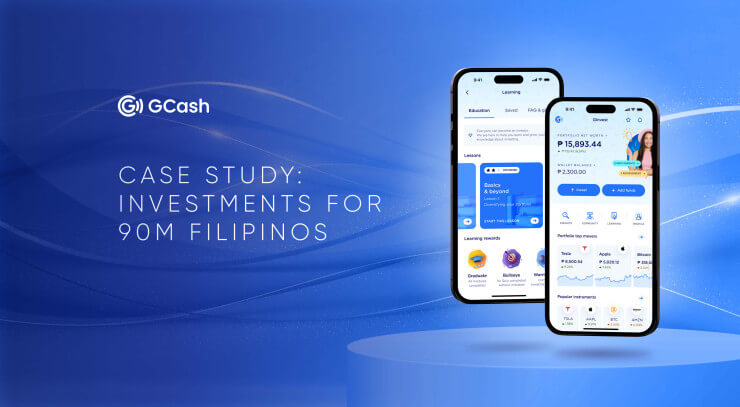



GCash UX Case Study: Democratizing Investments for 90M Filipinos
The new and improved GInvest service was aimed to provide Filipinos with an investment opportunity that previously seemed unattainable. An experience designed by UXDA is set to transform the mindset of 90 million Filipinos, showing that investing isn't only for rich and financially savvy people.





Runrate UX Case Study: Financial Management Platform for Happiness
This is a UX Case Study of the Runrate app's UX design, that seamlessly combines planning, budgeting and investing with a philosophy of manifesting the future.
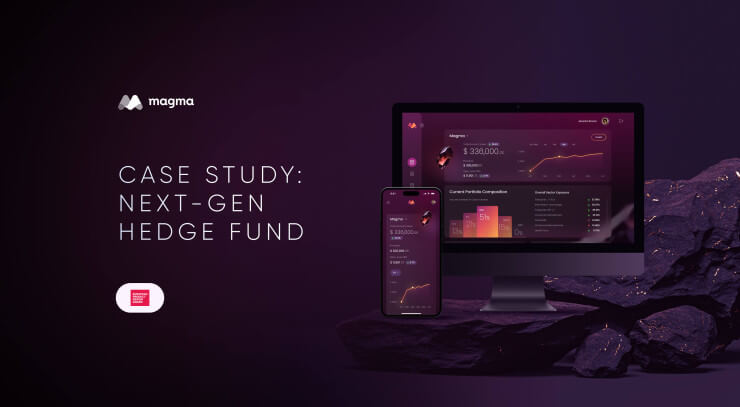
Magma UX Case Study: Digitalize NBA Players' Investments to Beat Market Volatility
UXDA designed a next-gen investment platform, for high-net-worth individuals. The aim was to create a quantitative hedge fund product to simplify and enhance the investment experience with cutting-edge technologies.

From Hero to Zero: The Fatal Impact of a Poor Product Launch in Banking
A weak launch strategy results in a range of negative outcomes, including low adoption rates, poor customer experiences, high resistance and even reputational damage. In this article, we'll explore key reasons why a digital product launch could fail and offer tips on how to avoid these pitfalls.

The UX Formula for Customer Engagement in Banking
This formula could be applied to gain business breakthroughs and improve customer engagement in banking by adding just 4 key aspects to your business.

UXDA's Design Pyramid: Implementing DesignOps in Banks and FIs
DesignOps is a system of operations and processes that amplify the value and impact of design in a financial organization, increasing its customer-centricity and creativity.
Bank Culture: Transforming Banking Strategy with the UX Matrix
Companies with disruptor culture have the greatest potential. These businesses maximize their chances of success with Value and Design. These elements affect the formation of customer experience within any business. How finance companies can use this knowledge to establish disruptive culture?

Why Banks Without a Clear Brand Purpose Struggle to Build Customer Loyalty
How can purpose-driven banking save banks from losing millions? The main challenge is how to align banking services and products with a human-centered purpose.

A Boutique UX Agency Humanize Financial Services in 37 Countries
We are the UXDA - passionate experts in finance and UX design who turn products into a Digital Advantage for purpose-driven financial brands. Read our story.


