
Banking Innovation: Digital Transformation, AI, Technology and Future Trends
Banking innovation is the development of new technologies, business models, digital experiences and operating approaches that help financial institutions improve customer value, efficiency and competitiveness. It includes advances in digital banking, AI, automation, data, open banking, personalization and emerging technologies that enable smarter financial services and better customer experiences.
What Is Banking Innovation?
Banking innovation is the process of improving how financial services are designed, delivered and operated through new technologies, products, business models and customer experiences, helping banks respond to changing expectations and market conditions.
What Are the Main Areas of Innovation in Banking?
Key areas include AI-powered banking, intelligent automation, open banking, personalization, digital platforms, embedded finance, data-driven services, next-generation mobile banking and new digital products, all of which are reshaping how customers interact with financial institutions.
How Is AI Driving Banking Innovation?
AI is accelerating banking innovation by enabling personalized financial assistance, predictive insights, conversational banking, fraud detection, automation and increasingly agentic experiences, allowing banks to make services more proactive, contextual and efficient.
How Does Banking Innovation Improve Customer Experience?
Innovation can reduce friction, simplify complex journeys and create more relevant interactions by combining digital technology, customer insight and experience design, helping banks deliver faster, clearer and more personalized financial services.
What Is the Role of Digital Transformation in Banking Innovation?
Digital transformation provides the organizational and technological foundation for innovation by aligning technology, processes, data, customer experience and operating models, allowing banks to move beyond isolated digital improvements toward broader transformation.
How Can Banks Turn Innovation Into Competitive Advantage?
Innovation creates competitive advantage when banks translate emerging technologies and new ideas into distinctive customer value, better experiences and scalable capabilities, rather than adopting technology without a clear strategic or customer purpose.
What Is the Future of Banking Innovation?
The future of banking innovation will increasingly be shaped by AI, autonomous finance, intelligent automation, open ecosystems, personalization and experience-led transformation, making the ability to adapt and innovate continuously a critical part of long-term banking competitiveness.
Explore UXDA insights on banking innovation, innovation in banking, digital transformation, banking technology, AI in banking, fintech innovation, digital banking UX, customer experience and future banking trends.






Emirates NBD Case Study: Increase Digital Ecosystem ROI with Strategic UX in Middle East Banking
This case study delves into how the strategic UX approach transformed Emirates NBD’s digital ecosystem, setting a new standard of excellence for digital banking worldwide and solidifying the Emirates NBD brand’s position as a leader in the Middle East financial industry.

Banking Innovation Under Pressure: 10 Lessons from NASA, Boeing and SpaceX
How prepared are traditional banking players? Despite all their experience, resources, confidence, and influence, could they still fail their customers, leaving them stranded in the 'digital' space like NASA astronauts? The standoff between Boeing and SpaceX in space suggests this is entirely possible, but there is a solution.

How Technology-Led Banking Innovation Increases Customer Friction and Cost
Modern banking executives must innovate effectively in a rapidly evolving digital landscape. While drawn to AI, blockchain, cloud infrastructure, and open banking APIs, they often overlook user experience (UX). This article explores how a user-driven approach to innovation can ensure financial brands' survival and success in the digital age.

On-Device vs Cloud AI and the Future of Personalized Banking UX
Integrating AI into banking services will obviously revolutionize the user experience in financial services, offering real-time advice and 24/7 transaction monitoring. The main question is which AI will serve banking first ─ on-device AI or cloud-based AI? Let’s compare!




AI in Financial Social Media: How Banks Can Personify Brand Communication
There is another promising area of AI use for financial brands ─ marketing and brand communication. The UXDA team assessed the potential of humanizing financial brands using ChatGPT and Midjourney by creating digital mascots based on the mobile service interface.
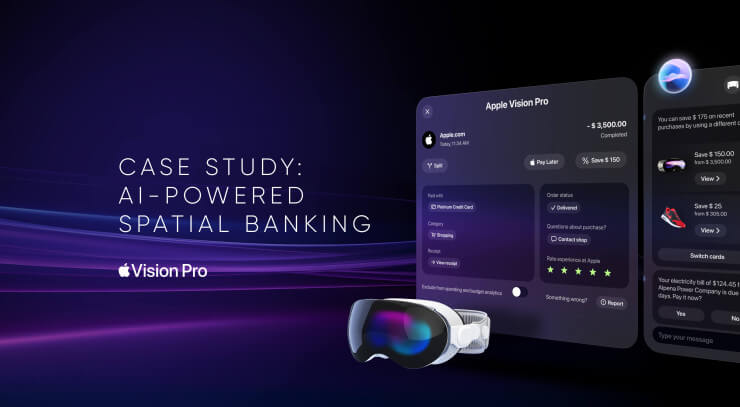

Future Banking Trends: Enable Next-Gen Financial UX
Future Banking Trends include technologies such as Generative AI, the metaverse, the blockchain, embedded banking, DeFi with CBDCs, and open banking which are creating the next-gen financial UX.

Musk’s Global Bank Ambition for X: Tackling UX Challenges Head-On
Knowing Elon Musk's large-scale approach, his intention to turn X into a bank could have disruptive consequences for the banking industry. However, the conflict between the existing UX patterns of a social network and the implementation of financial functions can complicate the transformation.

The Brand-to-Experience Gap in Banking: How to Align Brand Strategy With Digital CX
Can your financial company get more from design than just a standard interface for digital services? Absolutely! But there is one thing without which it is impossible to get the most out of your design initiatives.

Surviving Digital Disruption Through UX-Driven Banking Innovation
As the usage of physical cash diminishes and digital consumption skyrockets, traditional banks are undergoing a seismic shift to adapt to changing customer preferences. Digital transformation is reshaping industries and consumer behaviors, and the banking sector stands at a crossroads, poised to redefine our financial experiences in unprecedented ways.

Design Maturity as the Silent Barrier to Banking Innovation
A study by InVision surveyed 2,200 companies worldwide, revealing that design maturity significantly impacts key business success indicators. Mature companies with a strong design focus enjoy a five times higher impact on revenue, cost savings, and time to market compared to less mature ones.


