
Financial Product Design: From Isolated Features to Coherent Bank-as-a-Product Experience
Financial product design is the process of translating financial services, customer needs and business objectives into intuitive digital products that help people complete financial tasks and achieve meaningful outcomes. In banking, it combines product strategy, customer journeys, interaction logic, information architecture, brand expression and technology constraints into a complete end-to-end experience.
What Is Financial Product Design?
Financial product design shapes digital banking products, services and journeys around customer needs and business goals, helping people understand financial offerings, complete complex tasks and achieve outcomes with less friction and greater confidence.
Why Do Well-Designed Financial Products Still Create Fragmented Experiences?
The problem is often not that banks lack good products, but that cards, lending, investments, savings and other services are designed and optimized separately, allowing each product to develop different journeys, patterns, logic and service behavior over time.
How Does Local Product Optimization Create Experience Fragmentation?
Local optimization can create systemic fragmentation when individually successful products use different navigation models, interaction patterns, visual languages and service behaviors, forcing customers to experience the organizational structure of the bank instead of one coherent financial relationship.
What Makes a Successful Financial Product?
A successful financial product combines clear value, intuitive journeys, strong information architecture, interaction design and customer confidence, helping improve adoption, conversion, engagement, trust and satisfaction while reducing abandonment, support demand and operational complexity.
What Role Does Digital Brand Identity Play in Financial Product Design?
A strong Digital Brand Identity helps ensure that products feel connected through consistent visual language, interaction character, communication and service behavior, preventing individual financial services from feeling like disconnected products built by different organizations.
How Does Experience Debt Affect Financial Products?
Experience Debt grows when inconsistent patterns, duplicated solutions and disconnected product decisions accumulate across the ecosystem, increasing complexity even when individual products appear successful in isolation.
What Is Bank-as-a-Product Design?
Bank-as-a-Product design treats the entire bank as one coherent, continuously evolving experience by aligning products, customer journeys, Digital Brand Identity, design systems and UX governance around a shared experience architecture.
Why Should Banks Move From Product Design to Bank-as-a-Product?
As banks add new services, channels and AI capabilities, a Bank-as-a-Product approach helps ensure that every new capability strengthens the whole experience rather than becoming another disconnected product, improving coherence, scalability and long-term competitiveness.
Explore UXDA insights on financial product design, banking product design, fintech product design, financial UX, digital banking UX, product strategy, Bank-as-a-Product, Digital Brand Identity, Experience Debt and UX governance.
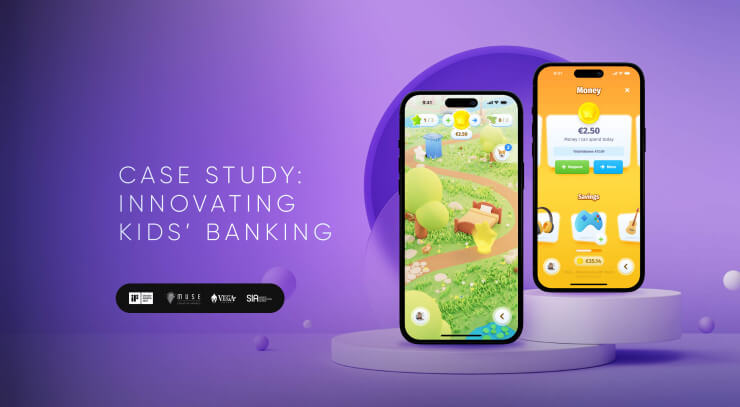



UX Case Study: How to Design Best Digital Bank For Kids
How could parents ensure their kids' financial future? UXDA explored this challenge with a research-based purpose-driven banking app concept. It provides insights into how an app could impact family relationships and ensure children's successful inclusion in the modern digital economy.

Why Retail Banking Customer Experience Breaks Down: 10 Systemic CX Problems
Why does retail banking customer experience fail despite major digital investment? Explore 10 systemic CX problems—from fragmented journeys and AI to personalization, trust and UX governance.
TOP10 Misconceptions About The Financial UX Design
Thousands of digital financial services do not achieve their goals. This is partly due to the design or, specifically, to the financial UX design misconceptions.

Don't Let Financial Experience Fail Ignoring the Problem-Solution Cycle
Why some digital financial products are demanded and loved by the customers while others bankrupt? In the series of "Financial UX Explained" we look at the Financial UX Methodology.

How To Implement Design Thinking In Banking
Find out what is the definition of the Design Thinking in banking, what steps the process includes and how to implement Design Thinking to overcome challenges.

10 Powerful Design Thinking Quotes To Shake The Banking Industry
Embrace the essence of design and customer-centered thinking in the form of a brilliant quotes collection.

Financial Dashboard Design: 20 Banking and Fintech UI Examples
There are so many beautiful visualizations of banking interfaces on Dribble and Pinterest. Unfortunately, if you look closer, quite often they are meaningless from the user experience perspective. Many of them are just beautiful animations that ...

What Do the Financial Experts Say About UXDA's Work?
You will be surprised to hear what our customers reveal about UXDA work process in independent Clutch research. I am happy to announce that UXDA’s NPS (Net Promoter Score) has reached 76 points — the same level as Apple, Amazon, and Netflix.

Banking UX/CX Checklist: Validate Digital Strategy Before Implementation
We have all experienced the moment when we understand that the time for change has come. Often these changes are associated with personal challenges. Most of the time we want to implement them as soon as possible and in the easiest way. This also...

FinTech Product Design Should Address Brain's Seeking System
Every day, millions of people, both offline and online, do not make their desired purchases. Let's take a look at how to get the Fintech product design right to deal with this.

User Experience Tips on How to Design Financial Product
Any successful business starts with a solution-to-solve problem, but not every solution is usable enough. So, what can be done?


